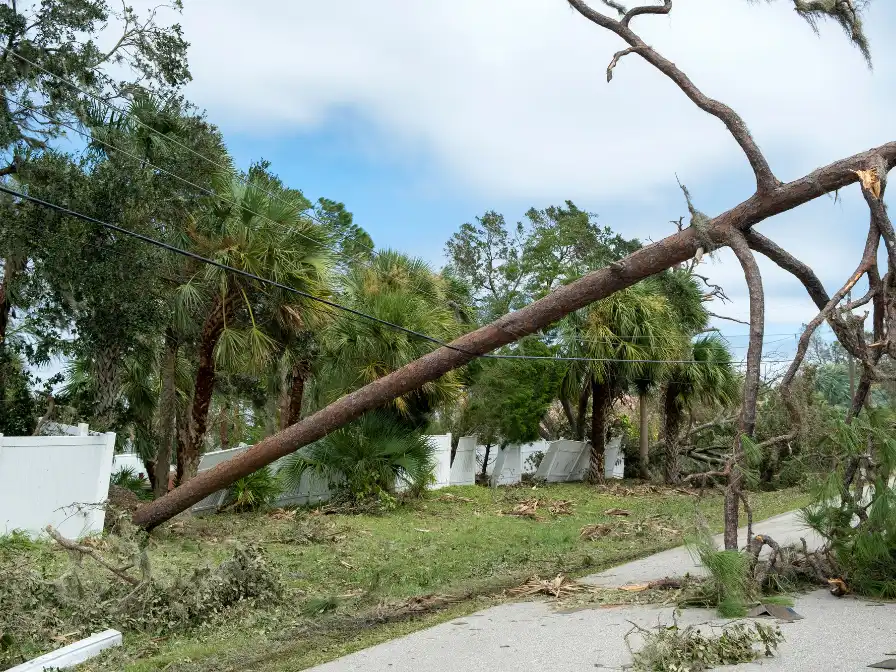

If you live in Central Florida, you already know that hurricane season does not really get serious until late summer and early fall. While June 1st is the official start date, the statistical peak of the season falls between mid-August and mid-October. That window is when the Gulf of Mexico and Atlantic are warmest, storm systems are most active, and the risk to your property is at its highest.
At Southern Environmental, we are a veteran-owned tree and land services company based in Plant City, FL. We serve homeowners and commercial property managers across Plant City, Lakeland, Brandon, Valrico, and the surrounding Central Florida area. Every year as the season peaks, we see the same pattern: the homeowners who prepared their trees and landscape ahead of time come through storms in far better shape than those who did not. Here is what that preparation actually looks like.
Why your trees are your biggest storm vulnerability
Most homeowners think about storm shutters, generators, and emergency supplies when they prepare for hurricane season. Those things matter, but your trees are often the biggest variable when it comes to property damage during a storm.
A well-maintained tree with a properly thinned canopy and no structural defects handles high winds significantly better than one that has been neglected. The difference between a tree that stays standing and one that comes down on your roof often comes down to whether it received proper care in the months leading up to the storm.
Here is what makes trees dangerous during a hurricane or severe storm:
Dead and weak branches are the first to fail. They do not need much wind to come down, and once they are airborne they can cause serious damage to structures, vehicles, and power lines.
Dense, unpruned canopies catch more wind. A thick canopy acts like a sail. The more surface area the wind has to push against, the more stress is placed on the trunk and root system, which increases the risk of uprooting or structural failure.
Structural defects are invisible until it is too late. Cracks, cavities, co-dominant stems, and compromised root systems are not always obvious from the outside. A tree that looks healthy can still be a serious hazard if it has underlying structural problems that have never been assessed.
Overgrown brush and debris become projectiles. It is not just trees that create storm hazards. Dense vegetation, loose branches, and accumulated debris can all become dangerous in high winds.
The most important storm preparation services for your property
Getting your property ready for peak hurricane season involves more than a quick trim. Here is what our team focuses on when we are preparing a property for storm season:
Tree trimming and pruning. This is the single most impactful thing you can do. Removing dead, damaged, and overgrown branches reduces the risk of them coming down during a storm and improves the overall structure of the tree so it handles wind more efficiently. We also thin the canopy to reduce wind resistance, which makes a meaningful difference in how a tree performs in high winds.
Hazard tree assessment and removal. Any tree with significant structural defects, advanced disease, or a compromised root system is a liability during a storm. Our ISA Certified Arborists assess each tree honestly and give you a clear recommendation. If a tree needs to come down, we handle the removal safely and completely before the storm season peaks.
Land clearing and debris removal. Overgrown brush, accumulated debris, and dense vegetation around your property all create additional storm hazards. Clearing them out improves drainage, reduces the risk of debris becoming airborne, and makes your property safer overall.
Forestry mulching for soil stability. Mulching stabilizes the soil, reduces erosion, and improves stormwater flow across your property. In a region that can receive several inches of rain in a matter of hours during a hurricane, good soil stability and drainage are not minor details.
Signs your property needs attention before the season peaks
You do not need to be a certified arborist to spot some of the most common warning signs. Here is what to look for when you walk your property:
• Dead branches or large sections of the canopy that are not producing healthy leaves
• Cracks or splits in the trunk or where major branches meet the trunk
• Fungal growth, mushrooms, or soft spots at the base of the tree
• A lean that has developed or increased over time
• Branches that overhang your roof, driveway, fence, or power lines
• Dense, unpruned canopies that have not been thinned in more than a year
• Accumulated brush, debris, or overgrown vegetation around the property
If you are seeing any of these signs, the time to act is now, before a storm is in the forecast and before our schedule fills up with emergency calls.
Why acting before the storm is always the better choice
We hear from homeowners every year after a storm who wish they had called us sooner. The reality is straightforward: addressing tree and landscape hazards before a storm is almost always faster, safer, and less expensive than dealing with the aftermath.
Proactive tree care costs a fraction of what emergency storm damage repairs cost. A branch that could have been removed for a reasonable fee becomes an emergency job when it comes through your roof. A hazard tree that could have been taken down safely becomes a crisis when it falls on a structure.
Beyond the financial side, there is the safety factor. Fallen trees and branches during a storm are not just a property damage issue. They are a genuine risk to the people and animals on your property. Getting ahead of those hazards is the responsible thing to do.
Serving Central Florida homeowners and property managers
Southern Environmental serves Plant City, Brandon, Dover, Seffner, Riverview, Valrico, Lithia, Lakeland, Bartow, Mulberry, Tampa, and the surrounding Central Florida area. We are licensed, insured, and led by ISA Certified Arborists who know the trees, terrain, and storm patterns of this region well.
We give you upfront pricing before any work begins, show up when we say we will, and do not leave until the job is done right.
Frequently asked questions about hurricane season tree care in Central Florida
When is it too late to prepare my trees for hurricane season?
Honestly, any preparation is better than none, even if a storm is already in the forecast. That said, the ideal window is well before a storm is threatening, when our team has the time to do the work properly and safely. If you are reading this and have not had your trees assessed yet this season, call us today. The sooner we can get out to your property, the better.
How do I know if a tree on my property is a storm hazard?
Look for dead branches, cracks in the trunk, leaning, fungal growth at the base, or soil that appears to be shifting near the roots. If a tree is within falling distance of your home or another structure, it deserves a professional assessment regardless of how healthy it looks. Our arborists will give you an honest evaluation and let you know if anything needs to be addressed.
What should I do if a tree falls on my property during a storm?
Call Southern Environmental as soon as it is safe to do so. Do not attempt to move or cut a fallen tree yourself, especially if it is near power lines or resting against a structure. Document the damage with photos before any cleanup begins, as this will support any insurance claim you need to file. Our team will get out to you as quickly as possible with the right equipment to handle the situation safely.
Does homeowners insurance cover storm-related tree damage?
In many cases, yes, particularly if a tree falls and damages a structure on your property. Coverage varies by policy, so we recommend reviewing your policy and contacting your insurance provider after any storm event. Our team can provide documentation to support your claim if needed.
Can you handle post-storm cleanup as well as pre-storm preparation?
Yes. Southern Environmental provides both pre-storm preparation services and post-storm emergency cleanup. If a storm does cause damage on your property, we are ready to respond quickly to remove fallen trees, clear debris, and assess any remaining hazards.
Do not wait for a storm to be in the forecast
The best time to prepare your property is right now, while the weather is calm and you still have time to do it right. Do not let another week go by with hazardous trees and overgrown vegetation putting your home and family at risk.
Contact Southern Environmental today to schedule a storm preparation assessment or request a free estimate. Call us at 813-566-8733 or book online through our website. We are available Monday through Friday from 7:30am to 5pm and Saturday through Sunday from 8am to 5pm.
Peak season is here. Let us help you face it prepared.