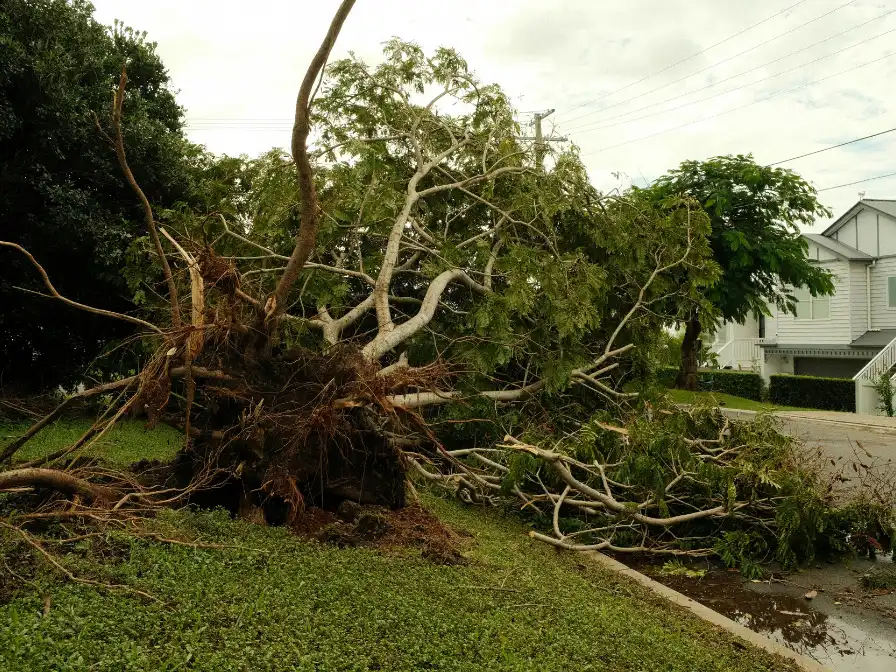
Late January might feel like a quiet time for your landscape, but it is actually one of the most strategic moments of the year to take a close look at your trees. The holidays are behind you, the growing season has not yet kicked back into gear, and the conditions on the ground right now make it easier to spot problems that could become serious hazards by the time spring storms and hurricane season arrive.
At Southern Environmental, we are a veteran-owned tree and land services company based in Plant City, FL. We serve homeowners and commercial property owners across Plant City, Brandon, Dover, Seffner, Riverview, Mulberry, Lithia, Lakeland, and the surrounding Central Florida area. Early-year tree hazard assessments are one of the most valuable services we provide, and here is why the timing matters so much.
Why January is the right time to assess your trees
Tree hazard assessments can be done at any time of year, but January offers a combination of conditions that make the work more effective and the findings more actionable:
Canopies are thinner, which means hidden problems are easier to see. Dead branches, crossing limbs, cracks in the trunk, and structural weaknesses that are obscured by dense summer foliage become much more visible when growth has slowed. Our arborists can assess the structure of a tree more accurately in January than during the peak of the growing season.
Trees are in a semi-dormant state, which means pruning and corrective work causes less stress. When a tree is not actively pushing out new growth, it handles pruning cuts more efficiently and heals with less overall stress. Work done now gives the tree the entire winter to begin recovering before the demands of spring growth begin.
You are ahead of the risk window. Central Florida’s most dangerous weather does not arrive until late spring and summer, but the trees that fail during those storms almost always had underlying problems that existed long before the storm hit. Identifying and addressing those problems in January means you are not scrambling to respond to an emergency when the weather turns.
Scheduling is more flexible. January is typically less busy than the spring rush and the pre-hurricane season window. That means better availability, more time for thorough assessments, and less pressure to rush through the work.
What our arborists look for during a tree hazard assessment
A professional tree hazard assessment is not a quick visual scan. Our ISA Certified Arborists evaluate each tree systematically, looking for the conditions that indicate elevated risk. Here is what that includes:
Dead, dying, or diseased branches. Dead branches do not need much wind to come down. They are a hazard in any weather, and they are often the first thing to fail during a storm. Identifying and removing them now eliminates that risk before the growing season begins.
Crossing and rubbing limbs. Branches that rub against each other create wounds that invite pests and disease. Over time, those wounds can compromise the structural integrity of the affected branches and spread to the rest of the tree.
Leaning trees and root problems. A tree that has developed a lean, or one where the soil near the base is cracking, heaving, or showing signs of root failure, is a serious hazard that requires immediate professional evaluation. Root problems are not always visible from the surface, which is why a trained eye matters.
Fungal growth and bark changes. Mushrooms or fungal conks at the base of a tree, unusual discoloration, soft spots in the bark, or areas where the bark is separating from the trunk can all indicate internal decay that is not visible from the outside. These are warning signs that should never be ignored.
Structural defects in the canopy. Co-dominant stems, included bark, and poorly attached branches are structural issues that significantly increase the risk of branch or trunk failure under load. These are the kinds of problems that are easy to miss without training but that make a real difference in how a tree performs during a storm.
Trees that are too close to structures or utilities. Even a structurally sound tree becomes a hazard if it is positioned where a failure would impact your home, a neighboring structure, a vehicle, or a power line. Proximity to structures is always part of our risk evaluation.
What happens after a hazard is identified
Finding a problem is only the first step. Here is what the follow-through looks like depending on what we find:
Targeted pruning and limb removal. Dead, damaged, and structurally problematic branches are removed using proper arboricultural techniques that minimize stress on the tree and reduce the risk of decay spreading from the cut.
Structural pruning for younger trees. For trees that are still developing, January is an excellent time to make structural decisions that will influence the shape and stability of the tree for years to come. Correcting structural issues early is far less costly and disruptive than dealing with the consequences of poor structure in a mature tree.
Tree removal when necessary. When a tree is too compromised to be safely retained, removal is the responsible choice. Our team handles removals safely and completely, including stump grinding to eliminate the remaining root system and free up the space.
Stump grinding for previously removed trees. If you have stumps on your property from trees removed in previous years, January is a practical time to address them. Old stumps attract pests, create tripping hazards, and limit what you can do with the surrounding space.
Land clearing and brush removal. For properties with overgrown areas or sections that have not been maintained, clearing that vegetation reduces pest habitat, improves access, and creates a cleaner, safer property overall.
Getting ahead of hurricane season starts now
Hurricane season does not begin until June 1st, but the preparation that makes the biggest difference happens months earlier. The trees that cause the most damage during storms are almost never healthy trees that were simply overwhelmed by the wind. They are trees with pre-existing structural defects, root problems, or disease that went unaddressed.
A thorough hazard assessment in January gives you five months to address whatever is found before the season peaks. That is a very different position to be in than trying to schedule emergency tree work in August when every tree service in Central Florida is booked solid.
Beyond hurricane season, the work you do now also reduces risk from the spring thunderstorms, heavy rains, and seasonal wind events that are a regular part of life in Central Florida throughout the year.
Serving Central Florida homeowners and property owners
Southern Environmental serves Plant City, Brandon, Dover, Seffner, Riverview, Valrico, Lithia, Lakeland, Bartow, Mulberry, Tampa, and the surrounding Central Florida area. We are licensed, insured, and led by ISA Certified Arborists who know the trees, terrain, and seasonal patterns of this region well.
We give you upfront pricing before any work begins, show up when we say we will, and do not leave until the job is done right.
Frequently asked questions about early-year tree hazard assessments in Central Florida
How long does a tree hazard assessment take?
It depends on the size of the property and the number of trees being evaluated. A typical residential assessment takes between one and two hours. Larger properties or those with many mature trees may take longer. We will give you a realistic time estimate when you schedule.
Do I need a hazard assessment if my trees look healthy?
Yes, and this is one of the most important points we make to homeowners. Many of the most serious tree hazards are not visible from the outside. Internal decay, root problems, and structural defects can exist in trees that look perfectly healthy from a distance. A professional assessment evaluates what you cannot see as well as what you can.
What does a tree hazard assessment cost?
Contact us for a quote specific to your property. The cost of an assessment is almost always a fraction of what it would cost to deal with the damage from a tree failure, and in many cases the assessment is included as part of a broader service visit.
Can you assess trees that are close to my house or power lines?
Yes. Trees near structures and utilities are actually the highest priority for assessment, because the consequences of a failure in those locations are the most serious. Our team is experienced in evaluating and working safely around structures and utility lines.
What if I just had my trees trimmed last year? Do I still need an assessment?
Trimming and hazard assessment are different things. Trimming addresses the visible canopy, but a hazard assessment looks at the structural integrity of the tree, the root system, and internal conditions that trimming does not address. We recommend a professional assessment at least once a year regardless of recent trimming history.
Do not wait for a problem to become an emergency
The best time to find a tree hazard is before it causes damage. January gives you the visibility, the timing, and the scheduling flexibility to do this work right, before the growing season begins and before the storm season arrives.
Contact Southern Environmental today to schedule your early-year tree hazard assessment or request a free estimate. Call us at 813-566-8733 or book online through our website. We are available Monday through Friday from 7:30am to 5pm and Saturday through Sunday from 8am to 5pm.
Protect your property before the season demands it. We are here to help.