Most people assume that because Central Florida has mild winters, their trees and shrubs do not need much attention during the colder months. But that assumption can lead to some real damage when temperatures drop unexpectedly, frost settles in overnight, or a cold front rolls through with strong winds and heavy rain.
The truth is that Florida trees and shrubs are often more vulnerable to cold weather than trees in northern climates, simply because they are not adapted to handle it. A sudden freeze that would barely affect a tree in Georgia can cause significant damage to plants that have spent their whole life in a warm, humid environment.
At Southern Environmental, we are a veteran-owned tree and land services company based in Plant City, FL, and we work with homeowners across the Tampa Bay area and Central Florida to keep landscapes healthy through every season. Here is what you need to know about protecting your trees and shrubs this winter.
What cold weather actually does to your trees and shrubs
Before you can protect your plants, it helps to understand what you are protecting them from. Here are the most common types of cold weather damage we see in Central Florida:
Frost cracks. When temperatures drop suddenly, the outer layers of a tree trunk contract faster than the inner wood. This difference in contraction can cause the bark to split, creating cracks that weaken the tree’s structure and leave it vulnerable to pests and disease.
Root damage. The roots of young trees and shrubs sit close to the surface of the soil, which means they are exposed to temperature swings in a way that more established trees are not. Repeated freezing and thawing of the soil can stress and damage those roots over time.
Dried out foliage. Cold winds pull moisture out of leaves and needles faster than the roots can replace it, especially in evergreen plants. This leads to browning, wilting, and in severe cases, significant dieback that takes months to recover from.
Stress that invites pests. Cold-stressed trees and shrubs become targets for insects and disease. A plant that is already struggling from frost damage is much less equipped to fight off a pest infestation in the spring.
Practical steps to protect your trees and shrubs this winter
The good news is that there are straightforward things you can do to reduce cold weather damage on your property. Here is what our team recommends:
Apply mulch around the base of your trees and shrubs. A layer of organic mulch, such as wood chips, bark, or pine straw, acts as insulation for the root zone. It helps keep soil temperature stable, retains moisture, and reduces the impact of freeze and thaw cycles on the roots. Aim for a layer about 2 to 4 inches thick and leave a small gap between the mulch and the trunk to prevent moisture buildup and rot.
Water deeply before a hard freeze. This is one of the most overlooked steps in winter tree care. Hydrated plants handle cold temperatures significantly better than dry ones. If a hard freeze is in the forecast, water your trees and shrubs thoroughly the day before. Avoid watering during freezing temperatures since that can create ice on the soil and cause additional problems.
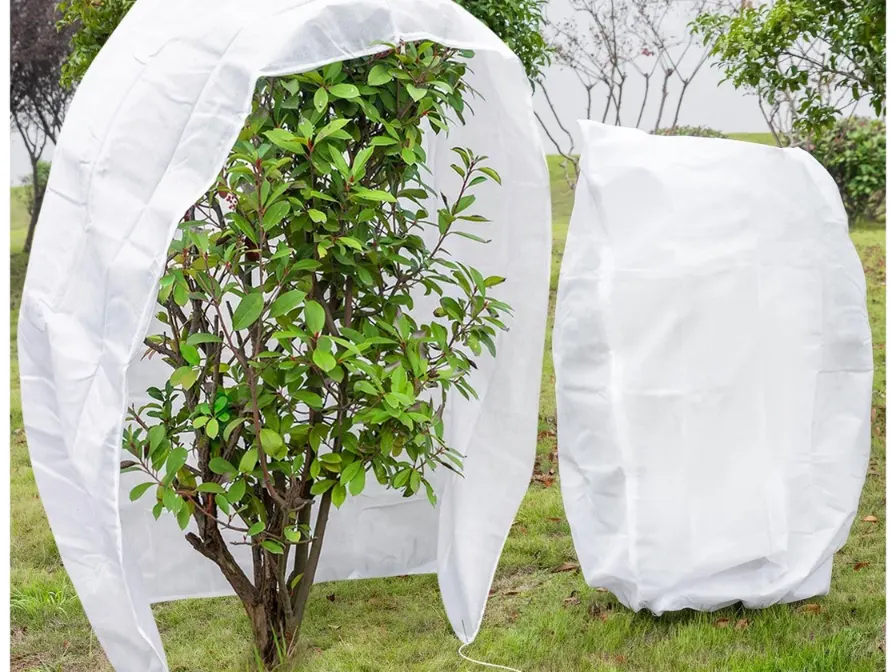
Cover smaller shrubs and young trees when frost is expected. Burlap, frost blankets, or breathable fabric covers can make a real difference for smaller plants during a frost event. Make sure the cover reaches the ground to trap warmth from the soil, and remove it during the day when temperatures rise so the plant can breathe.
Wrap vulnerable tree trunks. For young trees or thin-barked species that are prone to frost cracks and sunscald, wrapping the trunk with tree wrap from the base up to the first major branch can provide meaningful protection through the coldest months.
Hold off on heavy pruning until late winter or early spring. Pruning stimulates new growth, and new growth is vulnerable to frost damage. If you prune heavily in the middle of winter and a cold snap follows, that fresh growth can be damaged or killed. Light pruning to remove dead or damaged branches is fine, but save major structural pruning for when the worst of the cold has passed.
When to call a professional for winter tree care
Some winter tree care tasks are straightforward enough for homeowners to handle on their own. But there are situations where calling a certified arborist is the right move:
• If you notice frost cracks, splits, or significant bark damage on a tree
• If a tree or large branch came down during a cold front and needs to be removed
• If you are not sure whether a damaged tree can recover or needs to be removed
• If you want a professional assessment of your landscape heading into the colder months
• If you have young or newly planted trees that need specific care guidance for the winter
Our team at Southern Environmental can assess your trees, handle any pruning or removal that is needed, and give you honest recommendations for keeping your landscape in good shape through the season.
Serving Central Florida homeowners year-round
Southern Environmental serves Plant City, Brandon, Dover, Seffner, Riverview, Valrico, Lithia, Lakeland, Bartow, Mulberry, and the surrounding Tampa Bay area. We are available year-round and bring the same level of care and professionalism to every job regardless of the season.
We are licensed, insured, and led by ISA Certified Arborists who understand the specific trees, soil conditions, and climate of this region. We give you upfront pricing before any work begins and we show up when we say we will.
Frequently asked questions about winter tree and shrub care in Central Florida
Do Florida trees really need winter protection?
Yes, especially younger trees, recently planted shrubs, and tropical or subtropical species that are not adapted to cold temperatures. Central Florida winters are mild most of the time, but sudden freezes and cold fronts can cause real damage to plants that are not prepared for it.
How much mulch should I put around my trees in winter?
A layer of 2 to 4 inches of organic mulch around the base of the tree is generally ideal. Make sure to leave a small gap between the mulch and the trunk itself to prevent moisture from building up against the bark, which can lead to rot and pest issues.
Should I water my trees in the winter?
Yes, especially before a hard freeze. Hydrated trees and shrubs handle cold temperatures better than dry ones. Water deeply the day before a freeze is expected, but avoid watering during freezing temperatures.
Can a tree recover from frost damage?
It depends on the extent of the damage. Minor frost damage, like browning on the tips of leaves or small cracks in young branches, often heals on its own as temperatures warm up. More significant damage, like major bark splitting or widespread dieback, may require professional assessment to determine whether the tree can recover or needs to be removed.
Is it okay to prune my trees in the winter in Florida?
Light pruning to remove dead or damaged branches is fine during the winter months. Heavy structural pruning is better saved for late winter or early spring, just before new growth begins. Pruning too aggressively in the middle of winter can stimulate new growth that is then vulnerable to frost damage.
Take care of your landscape before the cold sets in
A little preparation now goes a long way when it comes to protecting your trees and shrubs through the winter. Do not wait until you see damage to start thinking about it.
Contact Southern Environmental today to schedule a winter tree assessment or request a free estimate. Call us at 813-566-8733 or book online through our website. We are available Monday through Friday from 7:30am to 5pm and Saturday through Sunday from 8am to 5pm.
Your landscape is an investment worth protecting, and we are here to help you do exactly that.