When you are getting ready to develop, build on, or improve a piece of property, one of the first decisions you will face is how to clear the land. And while it might seem like a straightforward question, the answer actually depends on a few important factors, including what you are building, the current condition of the land, your timeline, and your budget.
At Southern Environmental, we are a veteran-owned tree and land services company based in Plant City, FL. We handle both land clearing and site preparation work for residential and commercial clients across the Tampa Bay area and Central Florida. We get asked about the difference between land clearing and traditional excavation regularly, so here is a practical breakdown to help you understand which approach makes the most sense for your project.
What is land clearing?
Land clearing is the process of removing trees, brush, stumps, and other vegetation to make a piece of land usable. Modern land clearing often uses specialized equipment like forestry mulchers, which grind unwanted vegetation directly into the soil rather than hauling it away. The result is a clean, cleared surface with a layer of nutrient-rich mulch left behind.
Land clearing is generally the right starting point for projects where the goal is to remove overgrowth and prepare the surface of the land without dramatically altering the grade or soil structure underneath.
Here is what makes land clearing a strong option for many projects:
It is efficient and eco-friendly. Forestry mulching processes vegetation on-site, which eliminates the need to haul debris away and reduces the environmental footprint of the clearing process. The mulch left behind also helps prevent erosion and adds organic matter back into the soil.
It allows for selective clearing. If you want to preserve certain trees or landscape features while removing unwanted overgrowth, land clearing equipment can be operated with that level of precision. You are not committed to removing everything.
It minimizes ground disturbance. Because forestry mulching works at the surface level rather than digging into the soil, it preserves the soil structure and reduces runoff. This is particularly important in Florida, where environmental regulations around soil disturbance and runoff are taken seriously.
It is cost-effective for larger areas. For pastures, hunting land, trail clearing, and new construction prep on larger parcels, land clearing is typically the more affordable and practical approach compared to full excavation.
What is traditional excavation?
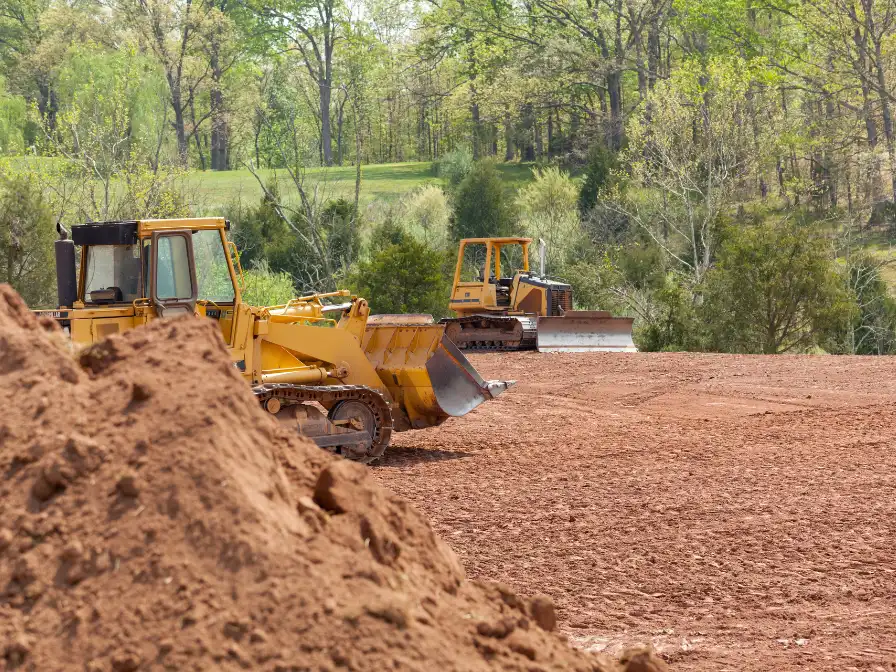
Excavation is a more intensive process that involves digging, grading, and reshaping the land using heavy machinery like bulldozers, backhoes, and excavators. It goes beyond surface clearing to actually move and remove soil, reshape the grade of the land, and prepare the ground for structural work.
Excavation is the right choice when the project requires more than just clearing the surface. Here is when it makes the most sense:
Foundation and structural preparation. If you are building a home, commercial building, or any structure that requires a foundation, excavation is necessary to level the ground, dig footings, and create the structural base the project requires.
Complete removal of large stumps and root systems. While stump grinding handles most residential stump removal needs, excavation can remove entire root balls and deep root systems when a project requires a completely clean subsurface.
Grading and drainage work. When a site needs to be leveled, sloped for drainage, or reshaped to meet engineering specifications, excavation is the tool for the job.
Urban and hardscape development. Projects like parking lots, roads, and commercial pads that require the land to be completely stripped and rebuilt from the ground up typically require excavation rather than surface clearing.
How to decide which one your project needs
Here is a practical way to think about it:
If your primary goal is to remove overgrowth, brush, trees, and stumps from a piece of land so you can use it for agriculture, recreation, or general development prep, land clearing is likely the right starting point. It is faster, less disruptive to the soil, and more cost-effective for that scope of work.
If your project requires reshaping the land, digging foundations, installing drainage systems, or preparing a site for structural construction, you will need excavation as part of the process. In many cases, land clearing comes first to remove the vegetation, and excavation follows to prepare the ground for construction.
Some projects need both, and that is completely normal. A new home build on a wooded lot, for example, might start with forestry mulching to clear the trees and brush, followed by grading and excavation to prepare the building pad and foundation.
The best way to know for sure is to have an experienced team walk the property with you and assess what the project actually requires. That is exactly what we do at Southern Environmental before any work begins.
What Southern Environmental brings to your project
We handle both land clearing and site preparation work for residential and commercial projects across the Tampa Bay area and Central Florida. Our team is experienced in evaluating land conditions, understanding local permitting and environmental regulations, and executing efficient, well-planned clearing and site prep for projects of all sizes.
Whether you are reclaiming an overgrown parcel, preparing a construction site, developing land for agricultural use, or clearing space for a new landscaping project, we have the equipment and the expertise to do it right.
Our services include:
• Forestry mulching and land clearing
• Tree and brush removal
• Stump grinding and removal
• Site grading and preparation
• Debris hauling and cleanup
Serving the Tampa Bay area and Central Florida
Southern Environmental serves Plant City, Brandon, Dover, Seffner, Riverview, Valrico, Lithia, Lakeland, Bartow, Mulberry, Tampa, and the surrounding communities. We are licensed, insured, and led by ISA Certified Arborists and experienced land clearing professionals who know the terrain and regulations of this region well.
We give you upfront pricing before any work begins, show up when we say we will, and do not leave until the job is done right.
Frequently asked questions about land clearing and excavation in Florida
Do I need a permit for land clearing in Florida?
It depends on the scope of the project and the specific location. Some land clearing work in the Tampa Bay area requires permits, particularly if protected trees, wetland areas, or environmentally sensitive zones are involved. Our team is familiar with local regulations and can help you understand what is required for your specific project before any work begins.
How long does land clearing take?
It depends on the size of the parcel, the density of the vegetation, and the type of equipment being used. A smaller residential lot can often be cleared in a day or two. Larger commercial or agricultural parcels may take several days to a week or more. We will give you a realistic timeline during your consultation.
Is forestry mulching better than traditional clearing methods?
For many projects, yes. Forestry mulching is faster, more eco-friendly, and less disruptive to the soil than traditional clearing methods that involve hauling debris away. It is particularly well-suited for Florida’s environment, where soil erosion and runoff are real concerns. That said, the right method depends on your specific project goals, and in some cases a combination of methods is the best approach.
Can you handle both the clearing and the site preparation for a construction project?
Yes. Southern Environmental can manage the full scope of land clearing and site preparation work, from initial vegetation removal through grading and site prep. Having one experienced team handle the entire process keeps the project moving efficiently and reduces the coordination headaches that come with managing multiple contractors.
What is the difference between stump grinding and stump removal through excavation?
Stump grinding removes the stump by grinding it down below the soil surface, leaving the root system in the ground to decay naturally. Excavation removes the entire stump and root ball from the ground, which is a more thorough option but also more disruptive to the surrounding soil. For most residential projects, stump grinding is sufficient. For construction projects where a completely clean subsurface is required, full excavation may be the better choice.
Get started with a free consultation
Not sure which approach is right for your property? Let our team take a look and give you an honest recommendation. We will assess the land, talk through your project goals, and give you upfront pricing before any work begins.
Contact Southern Environmental today to schedule a consultation or request a free estimate. Call us at 813-566-8733 or book online through our website. We are available Monday through Friday from 7:30am to 5pm and Saturday through Sunday from 8am to 5pm.
The right start makes all the difference. Let us help you get it right from the beginning.